Growth introduces complexity. Teams, systems, and responsibilities develop to solve specific problems, and at first this usually works well. Decisions move closer to where the work happens, inside functions, products, or regions. Over time, the organisation becomes more capable in parts, but less coherent as a whole.
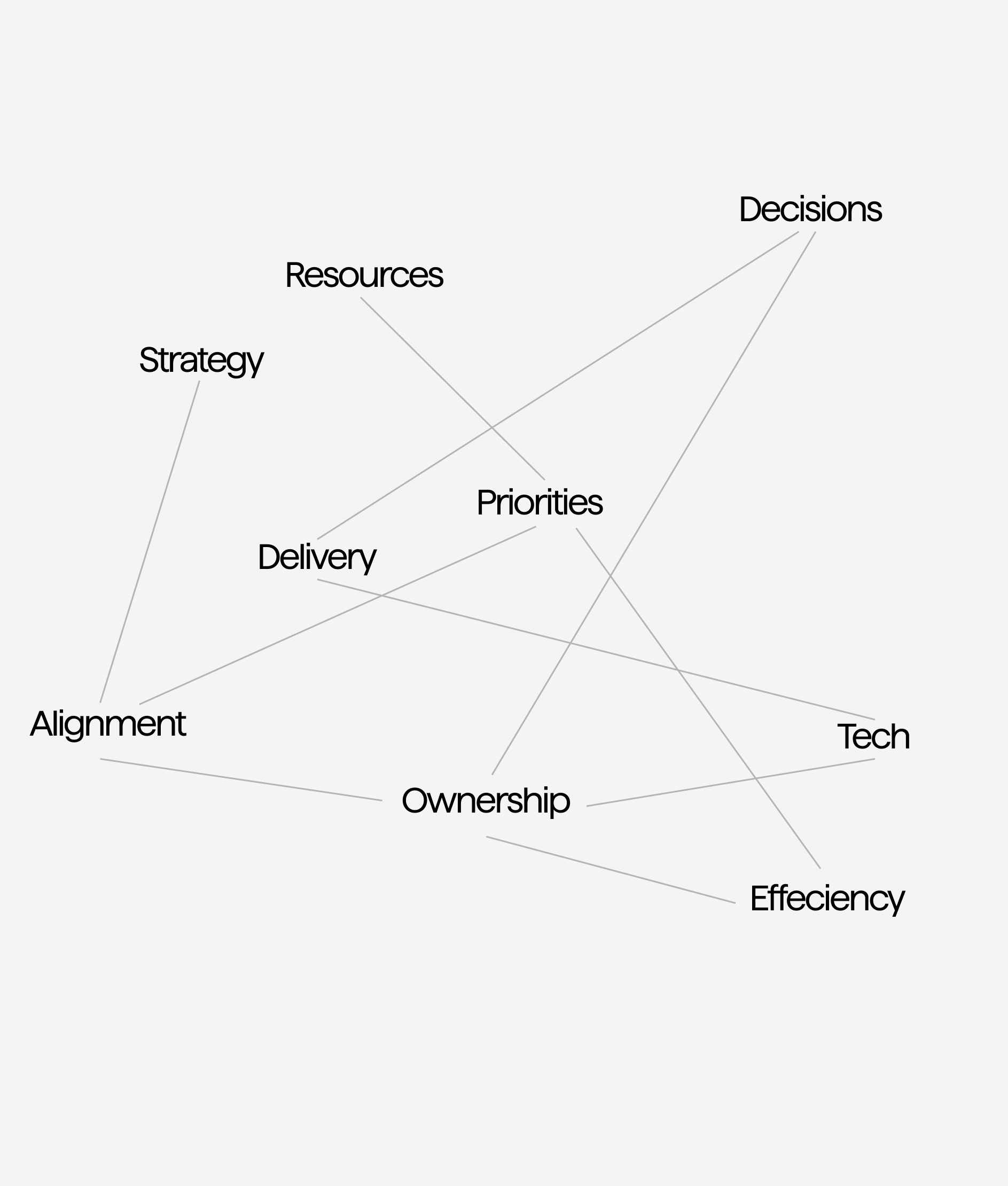
> Concentrated ownership
> Blind spots in crucial data points
> Dependencies multiply silently
> Inefficient processes
> New layers of complexity added
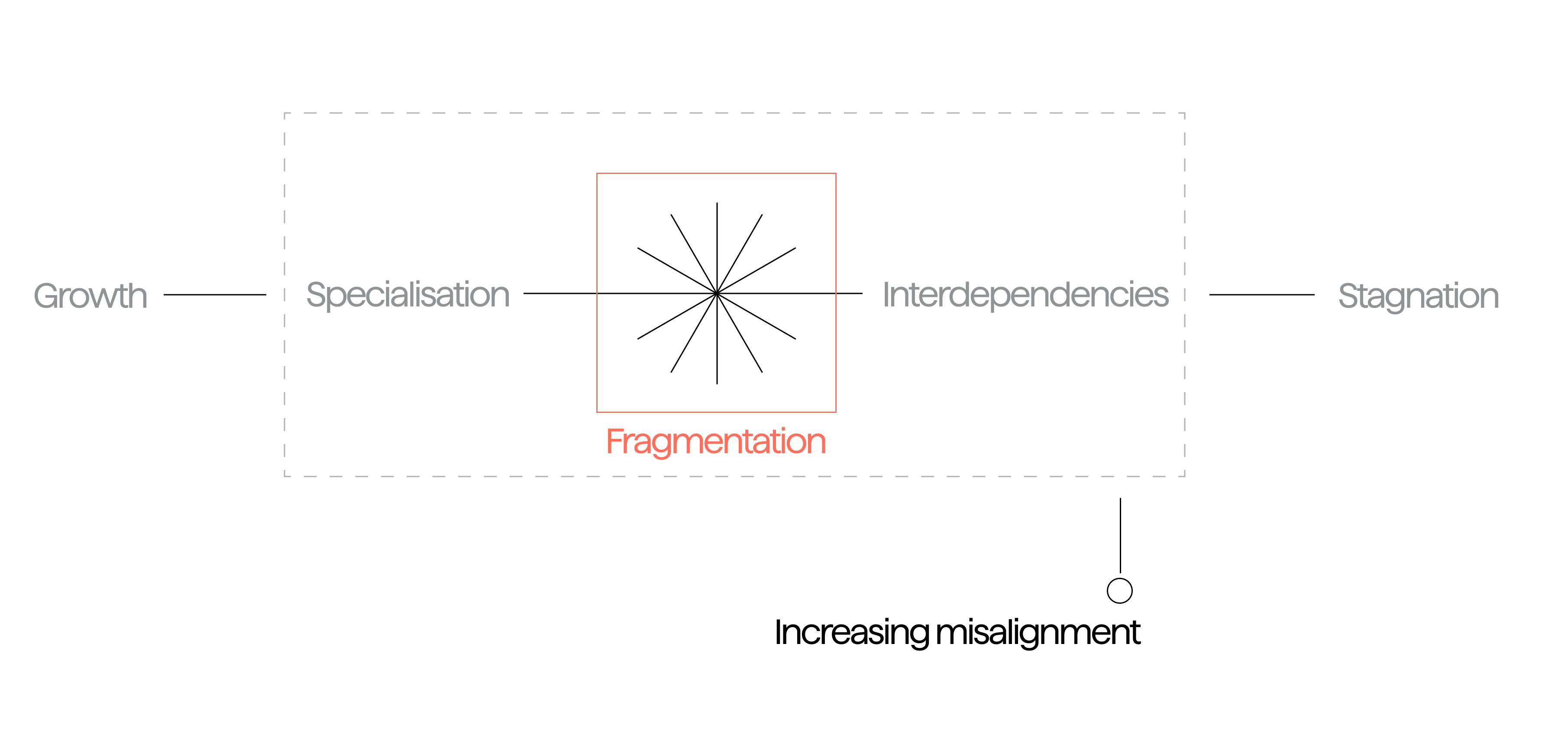
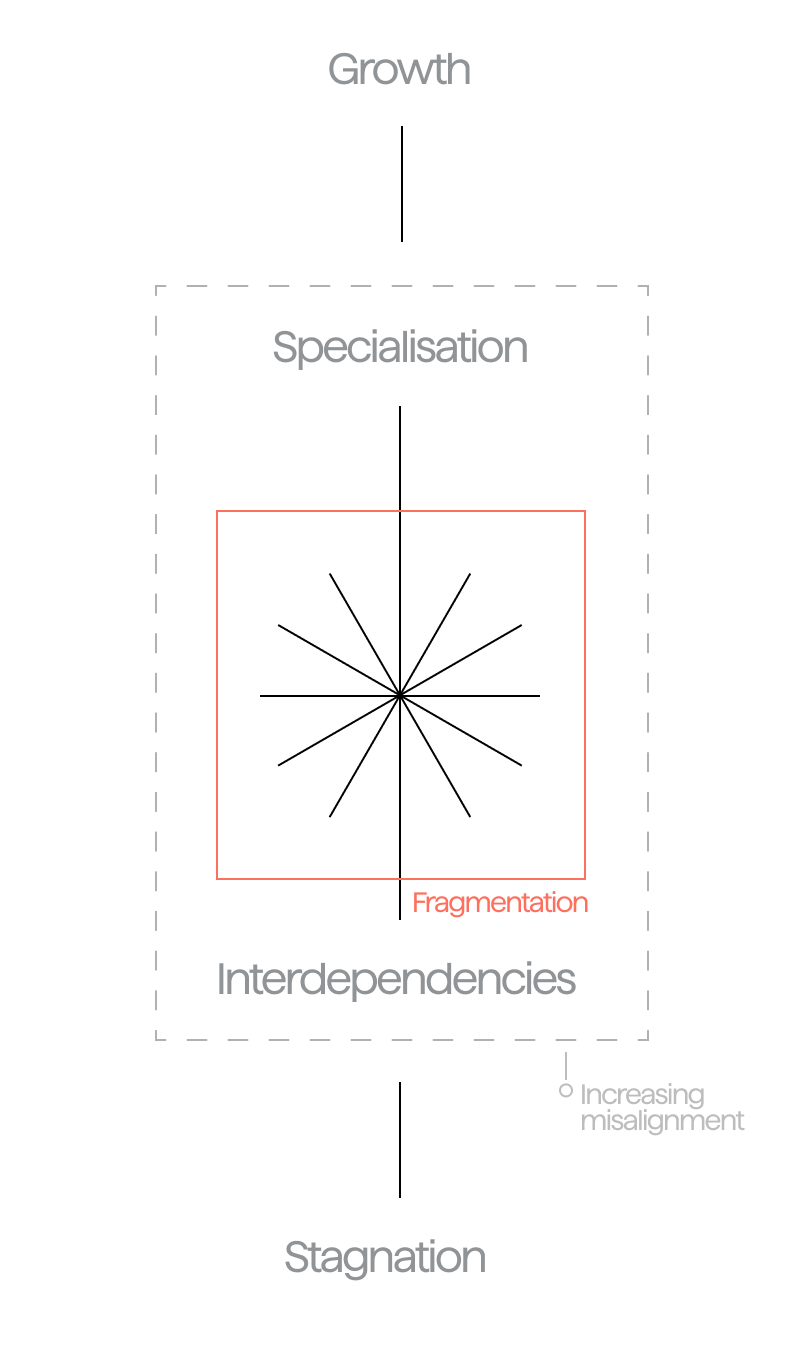
What once felt like momentum begins to feel heavier, not because people are making poor decisions, but because the context in which those decisions are made has changed. These constraints emerge gradually, through reasonable choices made at different moments, under different assumptions.
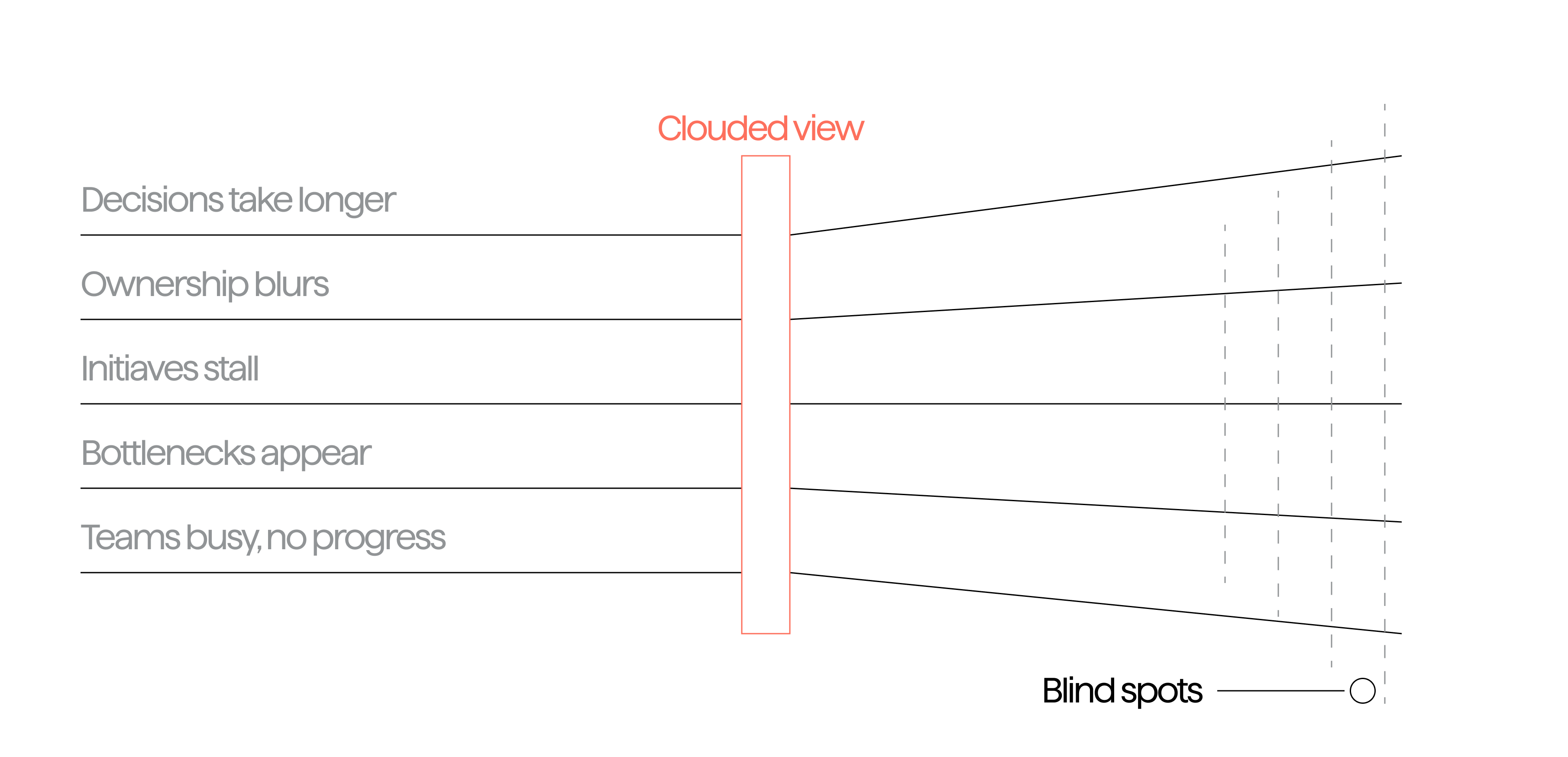
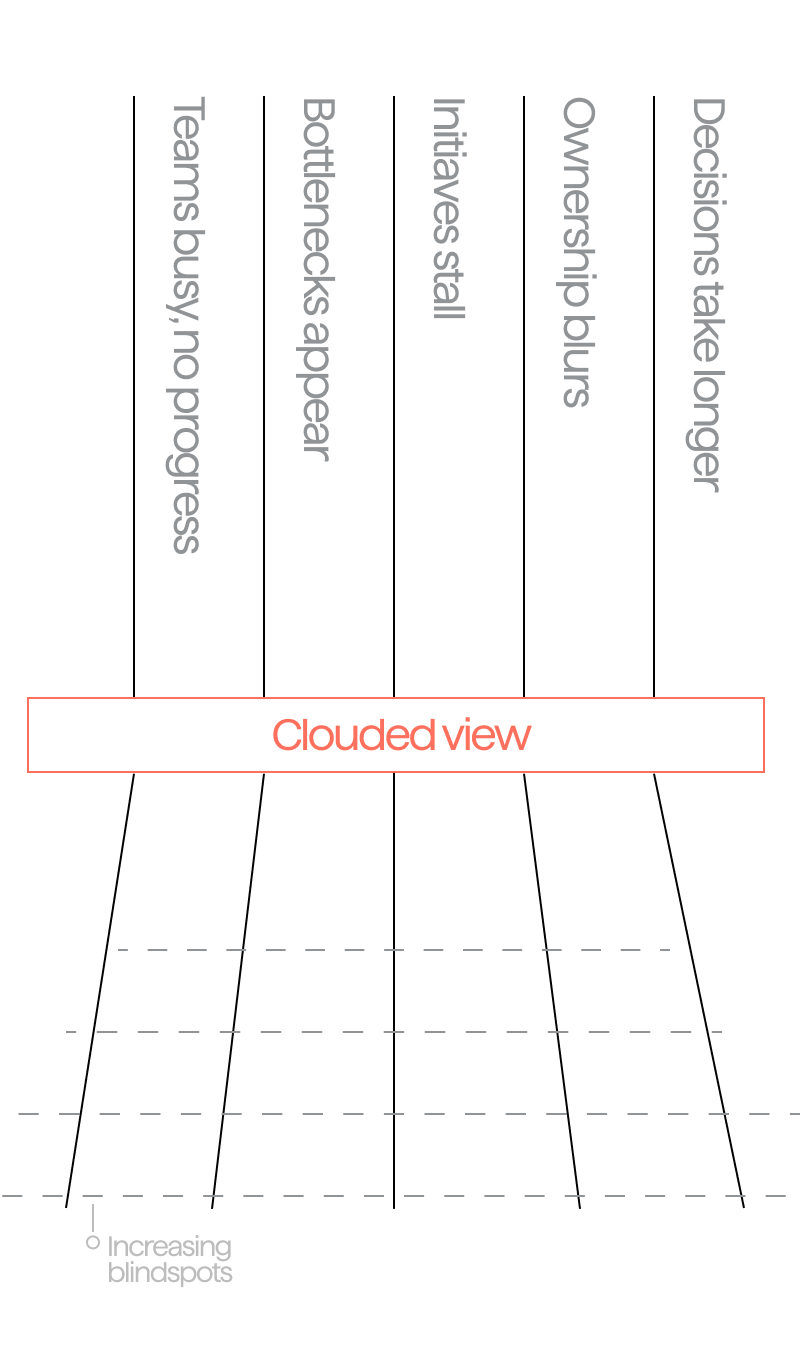
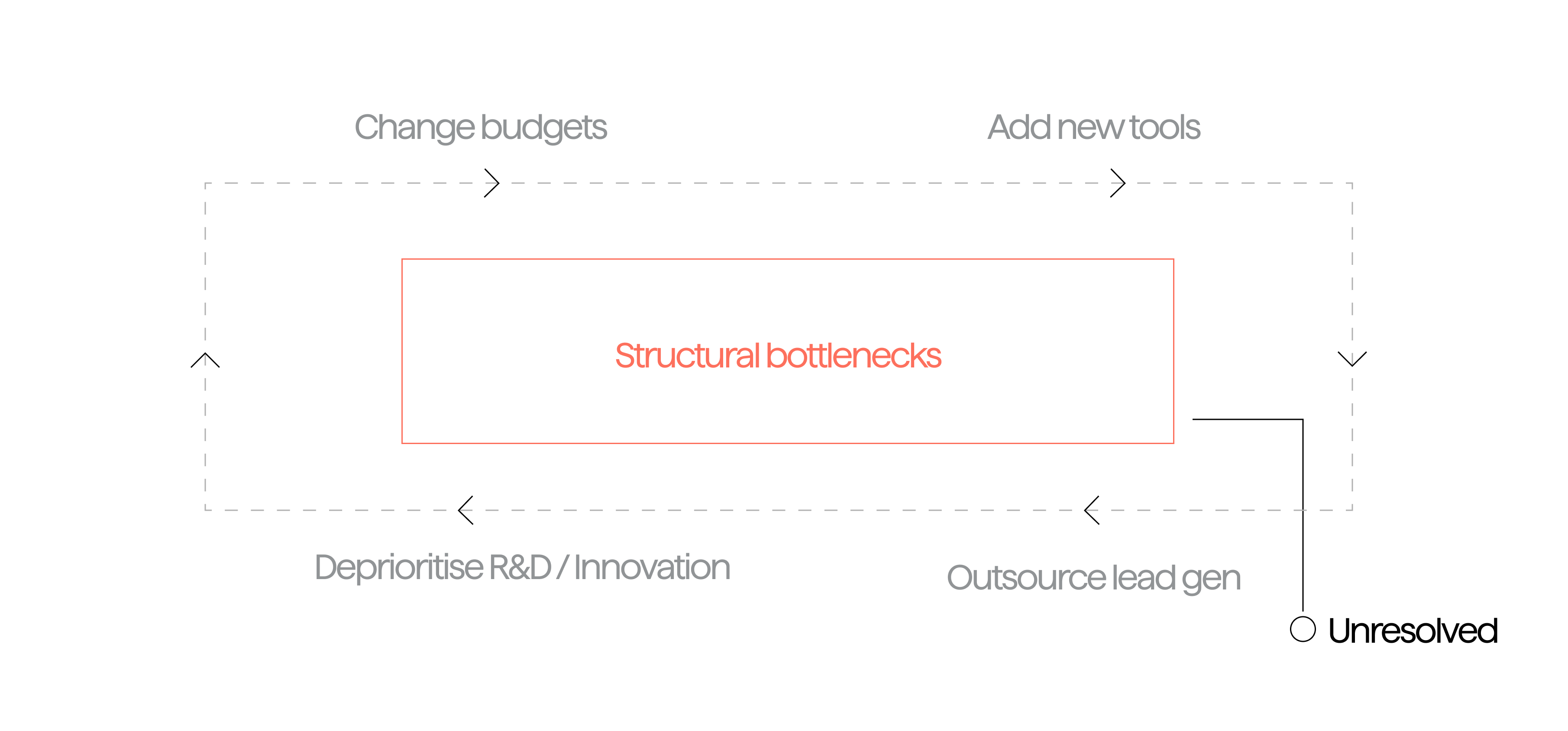
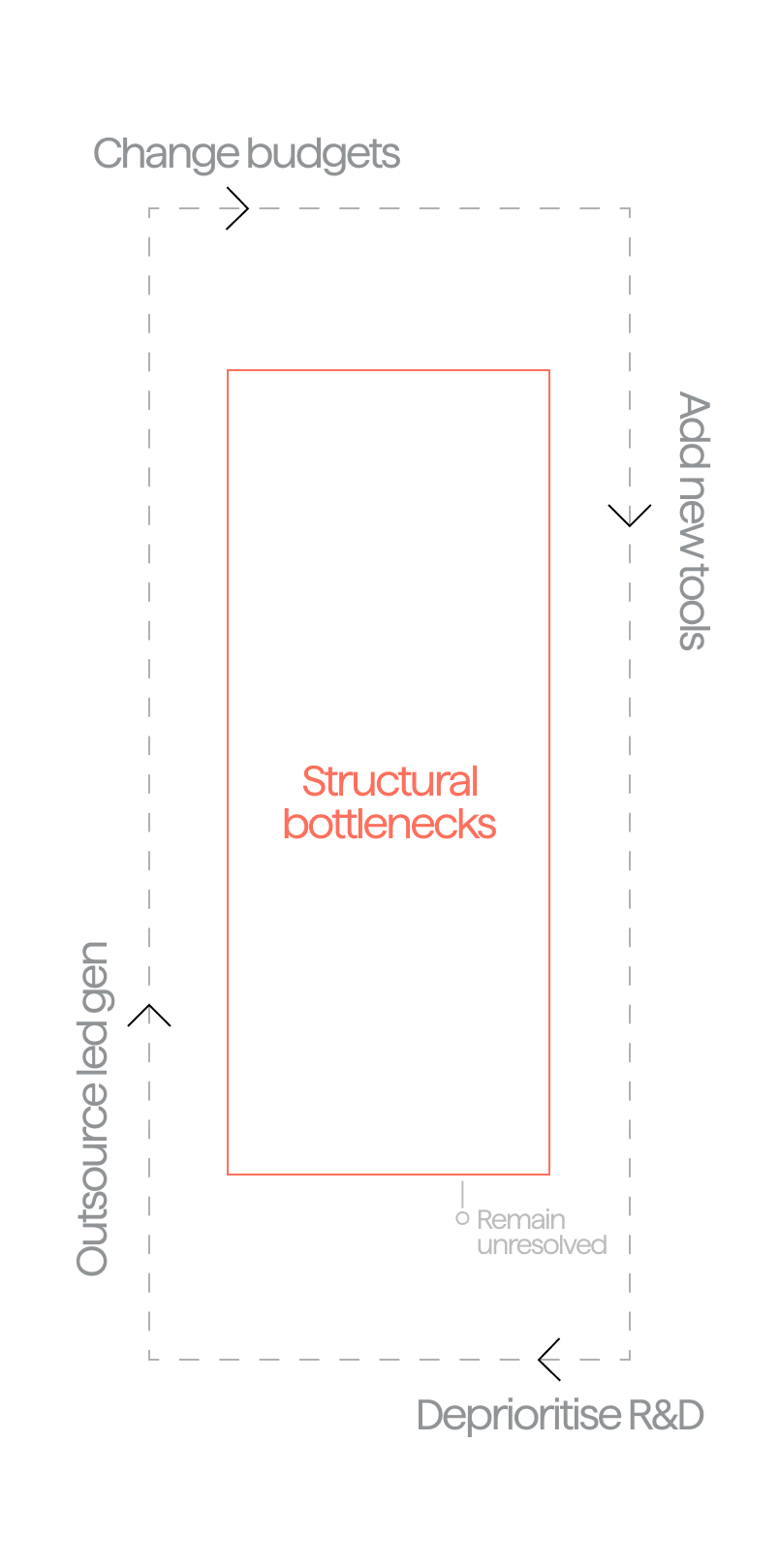
A recurring pattern in growing organisations is that structural constraints shape what becomes visible at the leadership level. Discussions focus on immediate pressures, while the underlying conditions that generate those pressures remain unaddressed.
Taken together, these choices shape an organisation that is harder to steer as one.
Growth creates local optimisation faster than organisational integration.



.jpg)




.jpg)